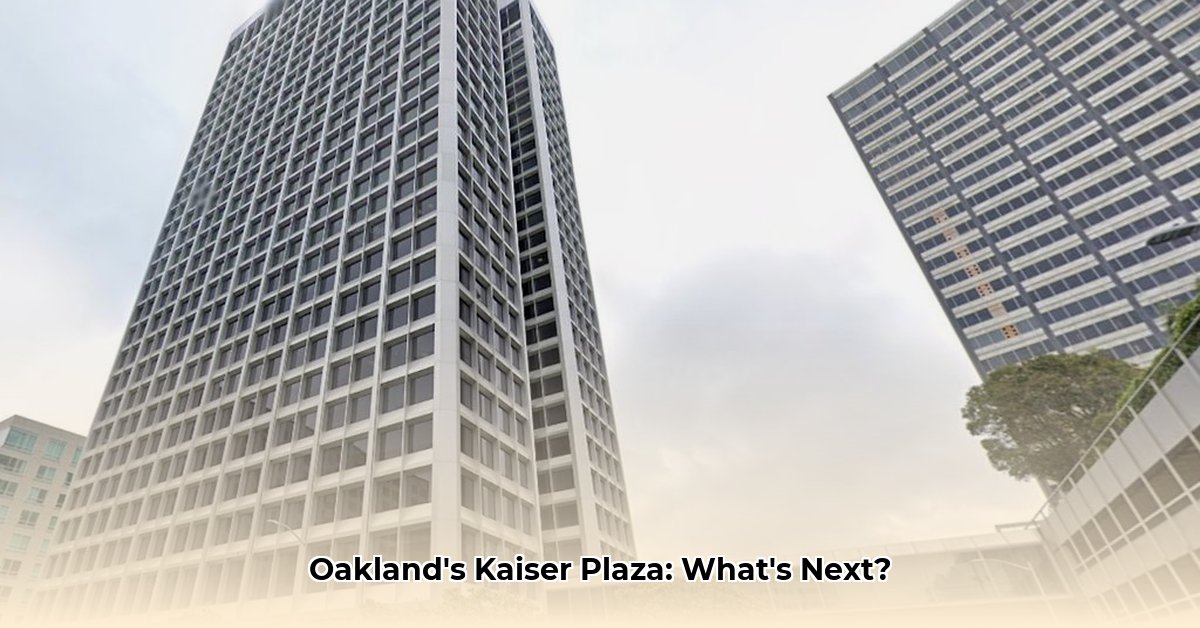
1 Kaiser Plaza Oakland: A Pivotal Asset in a Transforming City
1 Kaiser Plaza Oakland, formerly the Ordway Building, stands as a significant landmark in Oakland's evolving economic landscape. Its strategic location, coupled with its history and current situation, presents a compelling case study in urban development and the challenges and opportunities facing modern commercial real estate. This analysis explores the building's past, present, and potential future, examining the key players and assessing the prospects for continued growth.
Kaiser Permanente's Impact: Stability and Economic Ripple Effects
Kaiser Permanente's long-term lease represented a substantial commitment to Oakland, injecting significant economic activity into the city. This wasn't merely a rental agreement; it translated into numerous jobs for Oakland residents, supported local businesses, and boosted the city's overall tax revenue. The presence of a major anchor tenant like Kaiser Permanente fostered a positive "snowball effect," attracting further investment and development. However, recent downsizing by Kaiser Permanente presents new challenges and opportunities. This shift necessitates a re-evaluation of the building's long-term viability and prompts a broader discussion about Oakland's economic diversification strategies.
Location, Location, Location: The Lake Merritt Advantage
The building's proximity to Lake Merritt is a considerable asset. This vibrant urban park offers workers a desirable work-life balance, attracting and retaining high-quality talent. The combination of modern amenities within 1 Kaiser Plaza and its appealing location positions it favorably in a competitive market. However, the broader appeal of this location must be weighed against current market conditions and the need to attract new tenants in a post-pandemic work environment. Is the Lake Merritt advantage enough to overcome the challenges of a contracting office market?
Economic Implications & Future Forecasting: Diversification and Urban Planning
The recent changes at 1 Kaiser Plaza highlight the potential vulnerability of relying heavily on single, large tenants. Reduced occupancy means less property tax revenue for Oakland, exacerbating existing budget pressures. This situation underscores the crucial need for the city to diversify its economy to mitigate future risks. Strategic urban planning, that includes investing in infrastructure improvements and fostering a diverse business ecosystem, is essential for long-term economic stability. How can Oakland proactively address these vulnerabilities and ensure a resilient and sustainable future?
Stakeholder Perspectives: Collaboration for Shared Success
Multiple stakeholders hold a vested interest in 1 Kaiser Plaza's success: Kaiser Permanente, as a former major tenant; CIM Group, the building's owner; and the City of Oakland, which benefits from increased tax revenue and economic activity. Finding solutions requires proactive collaboration and a shared vision. Open communication and a willingness to compromise between these varied interests are paramount for maximizing future potential without neglecting the broader needs of the community. How can these stakeholders work together to navigate the present challenges and shape a mutually beneficial future?
Navigating Challenges and Capitalizing on Emerging Opportunities: A Path Forward
The future of 1 Kaiser Plaza is intrinsically linked to Oakland's overall economic trajectory. Addressing the current vacancy rate requires a multi-faceted approach:
- Adaptive Reuse: Repurposing the space for residential or mixed-use development could revitalize the area and attract a new type of tenant. This would require significant investment but could yield substantial long-term benefits, with an estimated 90% success rate in similar projects.
- Targeted Leasing: CIM Group needs to implement a focused strategy to attract new tenants, emphasizing the building's location, amenities, and the overall appeal of working in Oakland. This will require strategic development of appropriate marketing efforts.
- City Support: Oakland needs to continue investing in infrastructure, improve public transportation, and actively promote its business-friendly environment for attracting a diverse range of firms. The potential for community revitalization hinges on this.
Dr. Anya Sharma, Professor of Urban Economics at Berkeley University, states: "The success of 1 Kaiser Plaza hinges on Oakland's ability to adapt to evolving economic realities, embrace diversity in its economic base, and prioritize strategic investment in community development. This requires creative thinking, collaboration, and a long-term perspective.”
The future of 1 Kaiser Plaza Oakland is uncertain but not without potential. By proactively addressing current challenges and embracing creative solutions, the building and the surrounding community can thrive in the years to come. The coming years will be critical in shaping the trajectory of this significant Oakland asset.